


One of the most highly regarded art collectors in Japan during the post-World War II period was Takayuki Masaki (1895-1985). His collection, which he accumulated in just one generation, consists of approximately 1,300 objects, including three Japanese National Treasures, and thirteen Important > Cultural Properties. In 1968, the Masaki art Museum was established in Osaka in order to exhibit his collection and make it available for research.
Many of the highly regarded pieces of the Masaki Collection are ink paintings and calligraphy. And this collection also includes a very highly regarded collection of aesthetic objects related to Tea Ceremony, including the Imperial Cultural Property,“Portrait of Sen-no-Rikyu”.
We hope you will fully enjoy the Masaki Collection.
- Hours
- 10:00 - 16:30
(last entry 30 minutes before closing)
- Closed
- Monday, Tuesday when Monday falls on a national holiday.
- Admission Fee
-
Adults \700 University, High School Students \500 junior high school, primary school Students \300
- Reference
- Masaki Art Museum
2-9-26 Tadaokanaka, Tadaoka-cho,
Semboku-gun, Osaka, 595-0812, Japan
Phone 0725-21-6000 (+81-72-521-6000)
Fax 0725-31-1773 (+81-72-531-1773)
- Access
- 13 minutes walk from Tadaoka Station
on the Nankai Railway
7 minutes by taxi from Izumi-ohtsu
Station on the Nankai Railway
Current Exhibition:
"The tranquil beauty of Tea; a meeting of Japanese and Chinese traditions"
4/April/2026~5/July/2026
The tranquil beauty of Tea; a meeting of Japanese and Chinese traditions
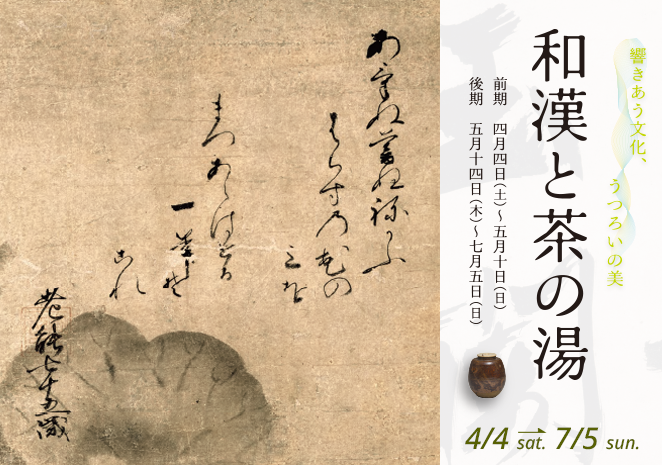
Since the Middle Ages, two different artistic traditions have coexisted and developed in a state of mutual flux in Japan: Japanese waka poetry and the painting tradition rooted in it, and the tradition of calligraphy and ink-painting inspired by imported Chinese culture. The tea ceremony played an important role as a setting where both these traditions were absorbed, and Japanese and Chinese elements flourished side by side.
The current exhibition features portraits of famous poets (kasen-e), calligraphy and ink painting based on Zen philosophy, as well as works like Nōami’s Lotus (Important Cultural Property) where waka and ink-painting appear together in the same picture space, tracing how Japanese and Chinese traditions intermingled and evolved. We will also look at tea-ceremony implements, examining how Japanese and Chinese cultural elements were incorporated into tea culture.
We hope that these works, displaying both Japanese and Chinese cultural features side by side, allow you to appreciate the multi-layered development of Japanese art.


